
Flooring Procurement Planning: How Great Estimates Prevent Delays
Flooring procurement planning starts at the takeoff. Great estimates order the right material, prevent delays, and keep projects moving.

Amruta Naik
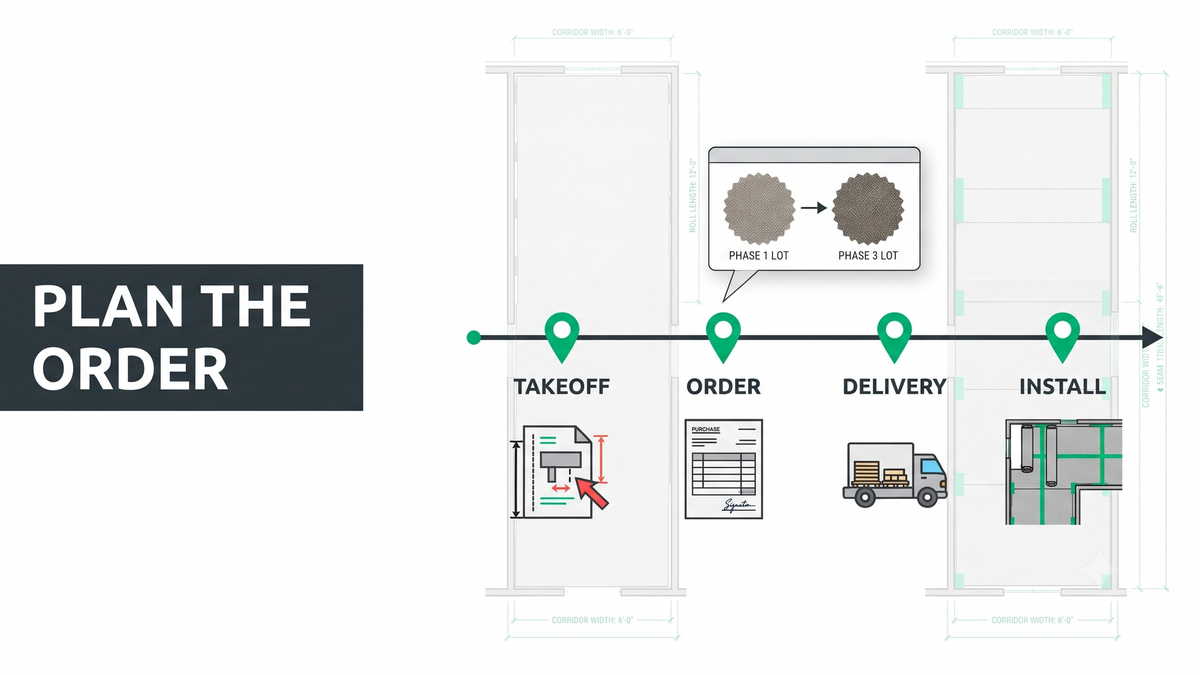
Every commercial project manager has lived through the moment. Installation is scheduled to start Monday morning. The material was ordered six weeks ago based on the estimator's quantities. The truck arrives with 90 percent of what the job needs. The remaining 10 percent is on a manufacturer backorder, and the mismatched dye lot on the replacement material means the visible corridor on the third floor is going to look different from the corridor on the second floor if the crew installs the available product now. The installers stand around for four hours while the PM negotiates with the manufacturer, the GC, and the developer about whether to proceed, delay, or reorder. That morning cost the flooring contractor more in labor absorption, mobilization, and coordination than the profit margin on the entire building. And every dollar of that cost was preventable at the takeoff phase, six weeks before anybody unrolled a carpet.
That is the fundamental thing to understand about flooring procurement planning. It is not a purchasing function that happens after the bid is won. It starts at the estimator's desk during the takeoff, when quantity, dye lot, roll width, material handling, and lead time all become decisions that either enable smooth installation or set up field problems that no PM can fix later. Great flooring estimates do not just produce accurate square footage numbers. They produce ordering-ready material summaries that reflect real manufacturer availability, real lead times, real dye lot coordination requirements, and real phased delivery logistics. Estimates that ignore procurement reality produce bids that win the award and lose the project.
This guide walks through how disciplined estimating turns into disciplined procurement: what a procurement-ready takeoff actually contains, how dye lot coordination works across phased delivery, how lead times drive quantity decisions, how material handling logistics affect roll width choices, and how the estimator-to-PM handoff either enables or blocks smooth ordering.
If you are pricing a commercial project right now where procurement is going to be complex, upload your plans and get a fast takeoff quote and let a procurement-aware estimate protect the install.
What Flooring Procurement Planning Actually Requires
Flooring procurement planning is the coordination of material quantities, dye lots, lead times, roll widths, phased delivery, storage, and material handling logistics that begins at the takeoff phase and continues through installation, ensuring that the right material arrives at the right time in the right quantity to keep the project on schedule and protect the contractor's margin. Great procurement planning is a function of great estimating: quantity accuracy, attic stock allocation, phased delivery scheduling, and dye lot coordination all get decided at the takeoff, not at the purchase order. Unicalibre Estimating is architect-led, delivers procurement-ready takeoffs that reflect ordering reality, and every deliverable is peer-reviewed before it goes out.
The reason procurement planning starts at estimating is that everything downstream of the takeoff depends on the numbers the estimator produced. If the quantity is wrong, the order is wrong. If the waste factor was blanket instead of pattern-specific, either too much or too little material gets ordered. If the roll width in the catalog does not match the manufacturer's actual roll width, the allocation is wrong. If the takeoff did not account for attic stock, the project has no reserve for future repairs or dye lot replacement. If phased delivery was not planned, the second phase orders from a different dye lot than the first and the visible seams between phases show forever.
A complete deliverable prevents that. Unicalibre Estimating provides peer-reviewed commercial flooring takeoffs delivered in native software formats including MeasureSquare, RFMS, Bluebeam, PlanSwift, Callidus, and Stack, with a BOQ organized by area, material, and phase, marked-up plans showing seam locations and material allocation, scope notes flagging dye lot coordination and manufacturer lead times, a material summary that reflects real ordering quantities including attic stock, and a deliverable your team can push directly to purchasing without re-entry.
Request a risk-free pilot takeoff on a project with complex procurement and see the difference a coordination-aware estimate produces.
What Ordering-Ready Actually Means
A takeoff that is ready for ordering carries three properties that a takeoff optimized only for bid submission does not.
Quantities that reflect real installation, not just measured area. Pattern-specific waste factors, roll allocation with cut visualization, seam planning that accounts for actual roll width, and reusable-offcut modeling all produce quantities you can actually order against. A takeoff with blanket 10 percent waste on herringbone LVP produces a shortage. A takeoff with 15 to 20 percent pattern-specific waste on the same herringbone produces an order that arrives in the right quantity the first time.
Attic stock allocated as its own line item. Every commercial flooring specification includes attic stock (spare material stored for future repairs), and pricing it inside the base waste percentage hides it from the material summary. Break attic stock out separately, list the required quantity per product per area, and make sure it lands in the purchase order rather than accidentally getting absorbed by the install.
Product SKUs matched to manufacturer availability. A specified product that has been discontinued, replaced, or reformulated is a procurement crisis waiting to happen. Verifying every specified SKU against the manufacturer's current availability during takeoff catches substitution issues while there is time to file an RFI or price an approved-equal, not after the PO is issued and rejected.
Dye Lot Coordination Across Phased Delivery
Dye lot management is the procurement dimension nobody warns junior estimators about, and it is where multifamily, hospitality, and long-cycle commercial projects most often fail.
A dye lot is a batch of carpet, LVT, LVP, tile, or other flooring product produced from a single manufacturing run. Product ordered in Phase 1 comes from one dye lot. Product ordered in Phase 3 twelve months later comes from a completely different production run and may vary visibly in color, sheen, or texture even when the SKU, color name, and pattern are identical. When two dye lots meet at a corridor transition, an elevator lobby entry, or a unit doorway, the difference is often subtle in daylight and dramatic under evening lighting or LED corridor fixtures. Residents and guests notice. Callbacks follow.
Great flooring estimates prevent dye lot problems through three procurement disciplines. First, calculate the total project quantity upfront including attic stock, not just Phase 1 quantity. Order the total upfront where storage allows, or coordinate with the manufacturer for reserved dye lots across phases. Second, document dye lot management in scope notes so the PM and purchasing agent know the coordination is required, not optional. Third, on projects too large for full upfront ordering, plan visible transitions to fall between phases at material change lines (elevator lobbies, transition profiles between different products) so any dye lot variation between phases is masked by an intentional material change rather than a visible carpet-to-carpet seam.
Lead Times, Manufacturer Availability, and Ordering Windows
Commercial flooring lead times vary dramatically by product, and estimators who quote "8 weeks" or "12 weeks" without verifying against the specific manufacturer for the specific project routinely produce takeoffs that create ordering problems.
Custom broadloom carpet with pattern repeat can carry 12 to 20 weeks lead time from purchase order to delivery, sometimes longer for custom colorways or pattern development. Manufactured broadloom in standard patterns typically runs 4 to 8 weeks. Carpet tile in stock colors typically ships in 2 to 6 weeks. LVT and LVP in standard SKUs typically ship in 2 to 4 weeks; specialty patterns and custom sizes can extend to 8 to 12 weeks. Porcelain tile from imported manufacturers can carry 8 to 16 weeks depending on origin and vessel schedule. Sheet vinyl for healthcare typically runs 4 to 8 weeks. Terrazzo and specialty materials can carry 16 to 24 weeks lead time.
The estimator's job is not to memorize these ranges. It is to build lead time verification into the takeoff workflow so the PM has real ordering windows rather than assumptions. Contact the manufacturer or verify current lead time against the specification and flag it in scope notes. When the specified product carries a lead time longer than the construction schedule allows, that is a procurement issue the PM needs to know about before bid submission, not after award.
Material Handling, Roll Width, and Physical Logistics
Physical logistics decide product choices in ways estimators often overlook. A 15 foot roll of commercial broadloom is heavier, more unwieldy, and requires larger material handling capability than a 12 foot roll. Some elevators cannot accommodate 15 foot rolls. Some stairwells make delivery to upper floors difficult regardless of elevator access. Some projects have loading dock constraints, storage constraints, or protection requirements for adjacent finished work that all affect what can actually be delivered and installed.
Great estimates capture these logistics in scope notes and factor them into product decisions. A high-rise multifamily project with a small service elevator may need to accept the higher waste factor of 12 foot rolls rather than the theoretical waste efficiency of 15 foot rolls, because 15 foot rolls physically cannot reach the upper floors. A retail tenant improvement in an occupied mall may need overnight delivery windows and phased material staging. A healthcare renovation may need infection control protocols on every material delivery. All of this is procurement scope, and all of it belongs in the estimator's headspace.
Common Procurement-Related Estimating Mistakes
Most procurement problems trace back to the same handful of takeoff-phase habits:
- Applying blanket waste factors that produce either over- or under-ordering
- Burying attic stock inside base waste instead of listing it as its own line item
- Not verifying specified SKUs against current manufacturer availability
- Skipping dye lot coordination on phased delivery projects
- Assuming lead times without verifying against the specific manufacturer
- Ignoring physical material handling constraints (elevator access, storage, staging)
- Producing takeoffs without scope notes that transfer procurement context to the PM
Pro tip checklist before you deliver any commercial flooring takeoff:
- Have I applied pattern-specific waste rather than blanket percentages?
- Have I broken out attic stock as its own line item?
- Have I verified specified product SKUs against manufacturer availability?
- Have I coordinated dye lot management on phased delivery projects?
- Have I verified lead times against the specific manufacturer?
- Have I noted material handling constraints (elevator access, staging, storage)?
- Have I flagged any product substitution issues as RFIs before submission?
- Have I organized the material summary by phase for phased projects?
How the Estimating Models Compare on Procurement Discipline
DIY (owner estimating): Procurement context often gets lost between the estimate and the purchase order because the same person is doing both under deadline pressure, and details fall through the cracks.
In-house estimator: Can build procurement discipline into the takeoff when trained, but a single estimator under bid pressure often defaults to base quantities and lets the PM sort out the ordering logistics.
Per-project outsourcing: Useful for overflow, but a rotating estimator does not learn your suppliers, your preferred manufacturers, or your regional lead time patterns, so procurement context varies bid to bid.
Dedicated FTE estimator: The same estimator every time, learning your preferred manufacturers, your GC's typical lead time expectations, and your PM's ordering workflow, delivering procurement-ready takeoffs peer-reviewed before handoff. Most reliable for high-volume commercial bidding, typically at a 50 to 60 percent cost reduction versus a domestic in-house hire.
Request a risk-free pilot takeoff and see what a procurement-aware estimate does to your team's ordering workflow.
What Changes in the Real World
The pattern repeats across contractors of different sizes.
A flooring subcontractor in Texas was bidding a 220-unit multifamily development with phased delivery across four buildings over 18 months. Adding dye lot coordination to the takeoff and ordering the total corridor carpet quantity upfront across all four buildings prevented visible dye lot variation at building transitions and protected an estimated 5 to 10 percent of the labor line that would have gone to callbacks and partial relay.
A commercial flooring contractor in Phoenix bidding a healthcare renovation had specified a custom sheet vinyl pattern with a 14 week lead time. The GC's schedule assumed 8 week lead time. Flagging the discrepancy as an RFI before bid submission surfaced the constraint and allowed the design team to either revise the schedule or approve a substitute product with shorter lead time, avoiding a mid-project procurement crisis that would have delayed the entire flooring package.
A flooring firm in Ontario bidding a high-rise multifamily project had priced 15 foot roll broadloom for the corridor package. Noting the service elevator would not accommodate 15 foot rolls led to a product substitution to 12 foot rolls before award, absorbed a slightly higher waste factor into the bid, and avoided a material handling failure that would have delayed corridor installation on every floor above the fourth.
Same lesson every time: procurement discipline begins at the takeoff. See how a dedicated estimator brings procurement discipline to your commercial bidding without adding headcount.
What to Send and What You Get Back
A procurement-aware flooring takeoff does not require a perfect package. It needs the right inputs.
What you send: architectural plans, the finish schedule and finish legend, specifications, any addenda, the construction schedule and phasing plan if available, your preferred manufacturers and suppliers, material handling constraints (elevator access, storage, staging), attic stock requirements from the specification, and your typical labor rates.
What you get back: a BOQ or Excel breakdown organized by area, material, and phase with pattern-specific waste and separate attic stock line items, marked-up plans showing seam locations and roll allocation, scope notes flagging dye lot coordination, lead times, manufacturer availability, and material handling logistics, a material summary that ties directly to purchase orders, and native software files in your platform (MeasureSquare, RFMS, Bluebeam, PlanSwift, Callidus, or Stack) so your team can push to purchasing without re-entry.
Timeline: standard turnaround is typically 24 to 48 hours for most trade packages, with same-day rush available when the deadline is closing. Communication runs over email, phone, and your preferred PM tools, and procurement questions are surfaced explicitly during handoff.
Want the procurement checklist your team can run on every commercial flooring bid? Download the checklist.
Frequently Asked Questions
What is flooring procurement planning?
Flooring procurement planning is the coordination of material quantities, dye lots, lead times, roll widths, phased delivery, storage, and material handling logistics that begins at the takeoff phase and continues through installation. It ensures that the right material arrives at the right time in the right quantity to keep the project on schedule. Great procurement planning is a function of great estimating, not a separate purchasing function.
Why does dye lot coordination matter on multifamily projects?
Dye lot coordination matters because multifamily projects deliver in phases over 18 to 24 months and can consume more carpet, LVT, or tile than most standalone commercial jobs. Product ordered in Phase 1 may not match visually if Phase 3 orders the same product from a later production run. Best practice is to order the total project quantity upfront or coordinate reserved dye lots with the manufacturer. This decision belongs to the takeoff, not the purchase order.
What are typical lead times for commercial flooring products?
Typical commercial flooring lead times vary significantly. Carpet tile in stock colors runs 2 to 6 weeks. Standard broadloom runs 4 to 8 weeks. Custom broadloom with pattern repeat runs 12 to 20 weeks. LVT and LVP in standard SKUs run 2 to 4 weeks; specialty patterns can extend to 8 to 12 weeks. Imported porcelain tile can run 8 to 16 weeks. Sheet vinyl for healthcare runs 4 to 8 weeks. Terrazzo runs 16 to 24 weeks. Always verify against the specific manufacturer during takeoff, not from memory.
How does the estimator affect procurement outcomes?
The estimator sets the entire procurement foundation through quantity accuracy, waste factor discipline, attic stock allocation, dye lot coordination notes, lead time verification, and material handling scope. A takeoff that ignores procurement reality produces purchase orders that fail in the field. A takeoff that is built for ordering delivers quantities that arrive on time, in the right dye lots, in roll widths the site can accept.
Can an outsourced estimator deliver procurement-ready takeoffs?
Yes. Unicalibre Estimating delivers takeoffs designed to be pushed directly to purchase orders, with pattern-specific waste, separate attic stock line items, dye lot coordination notes, verified lead times, and material handling context flagged in scope notes. Every deliverable is peer-reviewed before it goes out, and native software files in MeasureSquare, RFMS, Bluebeam, PlanSwift, Callidus, or Stack mean your team can push to purchasing without re-entry.
Great Estimates Are Great Procurement Plans
Commercial flooring installations do not succeed on installation day. They succeed on the day the estimator finalized the takeoff, decided the waste factors, allocated the attic stock, verified the lead times, coordinated the dye lots, and documented the material handling logistics. Every one of these decisions echoes forward through the entire project lifecycle, and the difference between a smooth installation and a stressful one is almost always what the estimator did or did not do six weeks before the truck arrived. Procurement planning is not a purchasing function. It is an estimating function that purchasing executes.
Bid season does not wait, and complex commercial projects are exactly where procurement discipline decides margin. A disciplined, peer-reviewed, architect-led process reads the specifications, verifies the manufacturers, coordinates the dye lots, plans the phases, and delivers a takeoff your team can order against without decoding. That is the difference between winning a project and inheriting a procurement problem.
Book a call and send your plans for turnaround and pricing. Plan the procurement at the takeoff, protect the install, and stop letting ordering surprises decide your profit.