
Interior vs Exterior Painting Takeoff: Not the Same Job
Interior vs. exterior painting takeoffs: same square footage, different estimates. Learn why interiors rely on documentation, while exteriors depend on access.

Amruta Naik
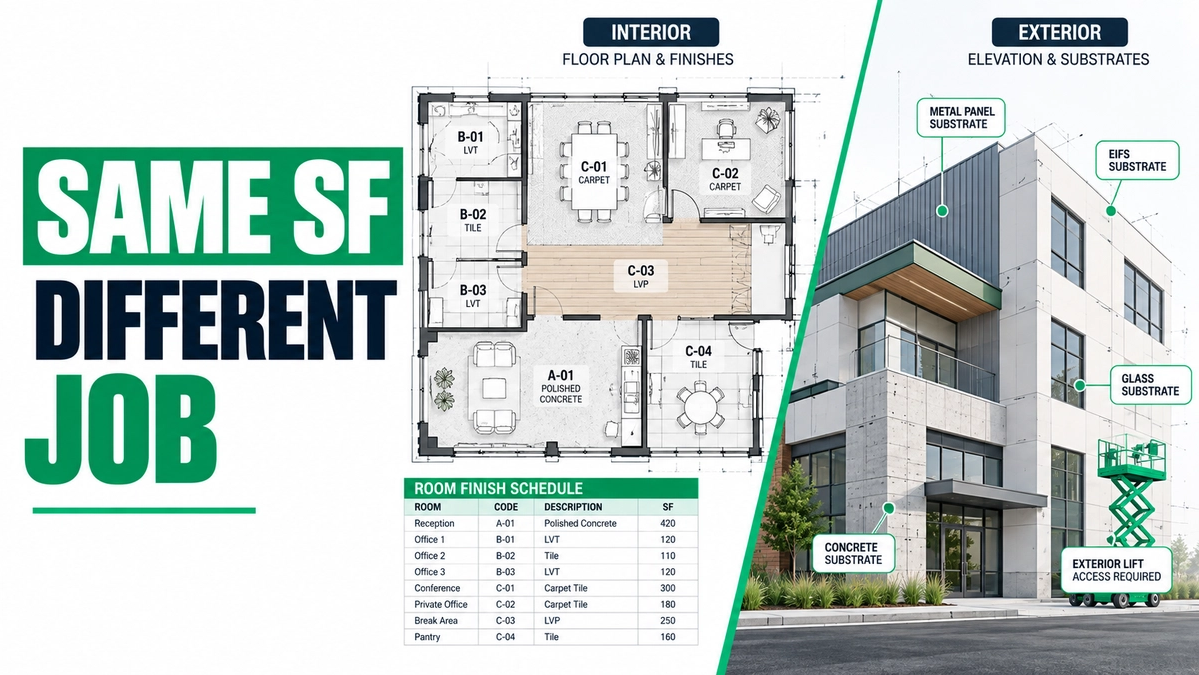
Same Square Footage. Not Even Close to the Same Job.
A GC hands you two painting scopes. Both 20,000 SF. If you priced them at the same rate, you already lost the job you needed to win. That is the interior vs exterior painting takeoff trap, and it is where painting contractors quietly lose bids they should have won or absorb costs they should have caught. Same square footage on paper. Not even close to the same job on site.
Interior painting is a document problem. You are pulling scope from the finish schedule, room by room, matching substrates to coating systems, deducting for doors and openings, and pricing prep against the condition of the drywall behind the paint. Exterior painting is an access problem. You are pulling scope from elevations, matching coatings to concrete, masonry, stucco, siding, and metal, and pricing lifts, scaffolding, and weather windows before you ever get to the paint. Notice what the exterior list carries that the interior list does not: access, weather, adjacent trades. Every one of those is a cost that has nothing to do with the paint and everything to do with whether the crew can physically reach the surface and finish it before conditions turn.
Here is what a square-footage-only bid quietly hides:
- Substrate differences (drywall behaves nothing like stucco, masonry, or metal)
- Prep scope that shifts from patching and caulking to pressure washing and scraping
- Coating systems specified by substrate and exposure, not by total area
- Access equipment (lifts, scaffolding, swing stages) that exterior demands and interior does not
- Weather windows, cure times, and seasonal limitations
- Protection of furniture, flooring, landscaping, or adjacent trades
- Occupied-space, phasing, or after-hours requirements
None of these are measurement failures. They are scope failures, and they are the reason a painting takeoff done from square footage alone is a takeoff that priced the paint and forgot the project. This guide covers what actually separates an interior painting takeoff from an exterior one, the checkpoint lists a disciplined commercial painting estimating pass runs on each, and where the same 20,000 SF can produce two very different bids. The discipline behind a painting quantity takeoff is the same whether the estimator sits inside a painting contractor's shop or works with them remotely.
What Makes an Interior vs Exterior Painting Takeoff Different
Interior vs exterior painting takeoff means treating two scopes with distinct substrates, coating systems, prep, and access as separate estimates, not one rate on shared square footage. Interior is a document problem read from finish schedules. Exterior is an access problem read from elevations. Unicalibre Estimating builds each as its own paint takeoff.
The distinction is not aesthetic. It is structural. The industry treats them differently for a reason, and the authorities that publish standards make that split explicit: the Painting Contractors Association governs painting practice across both, while surface preparation for exterior metals, masonry, and industrial substrates rides on standards published by AMPP (formerly SSPC) that simply do not apply to a drywall corridor. Coating systems, prep specifications, and inspection standards diverge with the substrate and the exposure, which is why a rate that works for a tenant improvement collapses on a multi-story facade.
Unicalibre Estimating is an architect-led firm that treats painting takeoffs as substrate-and-access documents, not surface-area totals. Our commercial painting estimating services and dedicated painting takeoff services build interior and exterior scopes separately, tied to the finish schedule or the elevations, with prep, coating system, access, and site conditions priced against the real work, not a blended rate. A commercial painting estimator working this way delivers a bid the contractor can defend from award to closeout. If you have a mixed-scope job on your desk, upload your plans and get a fast takeoff quote.
The Interior Painting Takeoff Checkpoints
Interior painting is read from the documents. The scope is defined room by room, not elevation by elevation, and the takeoff lives or dies on how carefully the finish schedule is reconciled with the plans, specifications, and details.
The eight interior checkpoints
1. Surfaces. Walls, ceilings, doors, frames, and trim, pulled from the finish schedule. Doors and frames are separate scopes from the wall, and trim is separate from both.
2. Scope by room. Every space carries its own finish assignment. Read the schedule room by room and cross-check against the floor plan, not against a project total.
3. Substrates. Drywall, gypsum, plaster, wood, or metal, each with its own primer and finish requirements. A takeoff that lumps all interior walls into "paintable surface" misses coating differences that show up in procurement.
4. Paint system. Primer and finish coats per specification. Two-coat and three-coat systems price very differently, and specifying an accent or high-gloss finish in select areas changes the number.
5. Preparation. Patching, sanding, caulking, and leveling. Prep is where interior takeoffs bleed margin when it is treated as a generic percentage instead of a documented condition.
6. Protection. Furniture, flooring, and adjacent finishes. On a tenant improvement or renovation, protection can be a real line item.
7. Height and access. Standard ceiling heights are usually reachable with common equipment, but atria, double-height lobbies, and mezzanines change the calculation.
8. Openings and deductions. Doors, windows, and other openings deducted from the wall area, so the number reflects actual paintable surface.
Interior special considerations
Occupied spaces, phased work, and matching existing finishes drive real cost on renovations. A bid that assumes the space is empty and the schedule is flexible will collapse against a hospital corridor or an active office. Cross-reference the scope gap with the responsibility matrix so protection and coordination stay in your scope only when they are your scope.
The Exterior Painting Takeoff Checkpoints
Exterior painting is read from the elevations. The scope is defined by facade, not by room, and the takeoff has to price the work of reaching the surface before it can price the coating.
The eight exterior checkpoints
1. Surfaces. Exterior walls, fascia, soffits, trim, and other envelope elements, taken from elevations and details rather than a floor plan.
2. Scope by elevation. Each elevation is measured on its own, so height, orientation, and access are captured accurately instead of averaged.
3. Substrates. Concrete, masonry, brick, stucco, siding, or metal, each with its own coating system, prep, and inspection requirements. A substrate mix on one facade means multiple coating scopes on the same wall.
4. Coating system. Primer, sealer, and weather-resistant finish per specification. Exterior systems are engineered against exposure, so the coating specified for a south facade may differ from a shaded north wall.
5. Preparation. Pressure washing, scraping, patching, and surface prep. On repaint work, prep can dwarf the coating cost, especially where existing coatings are failing.
6. Access. Lifts, scaffolding, swing stages, and difficult-to-reach areas. Access is where exterior takeoffs diverge from interior most sharply. Every elevation needs its own access assumption.
7. Height. Multi-story elevations and varying heights change equipment class, insurance, and productivity. A first-floor storefront and a fourth-floor facade priced at the same rate are two different jobs.
8. Site conditions. Weather, sunlight, cure windows, and seasonal limitations. A project that has to be completed in a shoulder season carries schedule risk the takeoff should acknowledge.
Exterior special considerations
Landscaping, paving, adjacent trades, and exterior protection add cost that never appears on the elevation. So do the standards the specified coating system rides on, from the Painting Contractors Association craft-standard side to AMPP's substrate-preparation specifications for exterior metals and masonry.
The mistakes that produce one rate for two scopes
- Applying an average dollar rate across interior and exterior square footage.
- Reading interior scope from the floor plan and skipping the finish schedule.
- Lumping substrates instead of separating drywall, wood, metal, masonry, and stucco.
- Pricing a coating system by product without checking the specified prep.
- Ignoring lifts, scaffolding, or swing-stage cost on exterior facades.
- Assuming weather and cure windows will accommodate any schedule.
- Skipping protection scope for furniture, flooring, or landscaping.
Who is best positioned to keep the two scopes separate
DIY (owner estimating after hours). Fast, but blending interior and exterior at one rate is exactly what happens when a tired pass strips the schedule down to a total.
In-house estimator. Strong when substrate-literate and available, but a fully loaded domestic hire is a heavy fixed cost, and cost estimator market data shows why carrying one through slow periods is hard to justify.
Per-project outsourced takeoff. Adds a disciplined interior-and-exterior split on the bids that matter, turned on when volume spikes.
Dedicated remote estimator (FTE model). The same estimator applying substrate, prep, and access discipline on every painting bid, typically a 50 to 60 percent cost reduction versus a fully loaded in-house hire.
Bidding a mixed interior-and-exterior scope right now? Request a risk-free pilot takeoff and compare the two scopes side by side.
What Separating the Scopes Changes on Real Bids
The payoff shows up as prep and access priced against the real work, not a blended rate. A few anonymized patterns.
A commercial painting subcontractor kept applying one dollar rate across interior tenant improvements and exterior repaints. After splitting the takeoff into interior document-driven scope and exterior elevation-driven scope, post-award access surprises fell sharply and closeout margin recovered by an estimated 5 to 15 percent, because lifts, scaffolding, and weather windows were priced rather than discovered.
A multifamily painting contractor was averaging prep across occupied units and vacant ones and losing hours on the occupied side. Reading each unit's prep scope from its actual condition, rather than a project average, protected a meaningful percentage of margin and reclaimed an estimated 10 to 15 hours a week previously lost to field coordination.
A commercial exterior repaint specialist bidding coastal work found that AMPP-driven prep specifications on failing coatings had been under-priced when the takeoff treated all metal alike. Separating the coating and prep scope by substrate and exposure removed the recurring hit. See how a dedicated estimator helps you bid more.
None of these are guarantees, and every project differs. The pattern holds: separating interior and exterior scope produces two defensible bids the painting team can actually work from, while blending them hands the field the difference to absorb.
What You Send and What You Get Back
Painting takeoffs work best when the estimator gets the whole document set going in.
What you send. Floor plans, elevations, details, the finish schedule for interior, the exterior scope schedule where issued, specifications for coating systems and prep, addenda and RFI responses, and any preferred coating manufacturers or standards.
What you get. Interior scope taken from the finish schedule room by room, with substrate, coating system, prep, protection, and openings deducted; exterior scope taken from elevations with substrate, coating, prep, access, height, and site conditions priced separately. Delivered in your native software (MeasureSquare, RFMS, Bluebeam, PlanSwift, or Callidus) with marked-up plans and documented assumptions, cleared through peer review first.
Timeline. Most trade packages turn in 24 to 48 hours, with same-day rush available near a deadline.
Communication. Email, phone, and your PM tools, with substrate mixes, access risks, and prep unknowns flagged as they surface rather than discovered on site.
Want the interior and exterior checkpoint checklist your team can run on every painting bid? Download the checklist and apply it across every project type you bid.
Frequently Asked Questions
What is the difference between an interior and exterior painting takeoff?
An interior painting takeoff is read from the finish schedule room by room, with substrates like drywall, plaster, wood, or metal and a prep scope focused on patching and caulking. An exterior painting takeoff is read from elevations, with substrates like concrete, masonry, stucco, or siding, weather-resistant coating systems, and access equipment priced for every facade.
Why can two 20,000 SF painting scopes carry very different prices?
Because square footage tells you how much surface exists, not what it takes to paint it. Interior scope carries prep, protection, and occupied-space considerations. Exterior scope carries access equipment, weather windows, and substrate coating systems that do not apply indoors. The same total area on interior tenant work and exterior repaint can produce two very different bids.
What is included in a professional commercial painting takeoff?
A professional takeoff separates surfaces, substrates, coating systems, prep scope, protection or access, height, openings or site conditions, and special considerations, tied to the finish schedule for interior work and the elevations for exterior work. Assumptions and exclusions are documented, and where substrates or exposures vary, coating scope is broken out to match.
How do access requirements change an exterior painting estimate?
Access can dominate an exterior bid. Lifts, scaffolding, swing stages, and difficult-to-reach elevations add cost that has nothing to do with the paint itself, and productivity drops as height and complexity increase. An exterior painting takeoff should assume access for every elevation individually, not average it across the project.
Why should substrates be estimated separately on a painting bid?
Because coating systems, prep specifications, and inspection standards vary by substrate. Drywall, plaster, wood, metal, concrete, masonry, stucco, and siding each carry their own primer, finish coats, and prep, and industry surface-preparation standards for exterior metals and industrial substrates simply do not apply to interior drywall. Lumping substrates hides that scope.
The Same Square Footage Is Two Different Jobs
Same square footage on paper is not the same job on site. Interior painting is a document problem read from the finish schedule. Exterior painting is an access problem read from elevations. Estimating them at one rate is how contractors lose bids they should have won or absorb costs they should have caught. Every checkpoint the exterior scope carries and the interior scope does not (access, weather, adjacent trades) is a real cost that has nothing to do with the paint and everything to do with whether the crew can reach the surface and finish it before conditions turn.
The discipline is straightforward and worth enforcing on every bid: split interior and exterior into two takeoffs, read interior from the finish schedule and exterior from the elevations, price substrates and coating systems separately, and put access, prep, and site conditions on the exterior scope where they actually live. Square footage tells you how much surface exists. The drawings, elevations, substrate, and site conditions tell you what it takes to paint it.
Bid season does not slow down, and the painter whose interior and exterior scopes are cleanly separated is the one whose numbers hold up when the crew hits the facade. Book a call and send your plans for turnaround and pricing with Unicalibre Estimating, the architect-led, peer-reviewed painting estimating partner that treats each scope as its own job.