
Case Study · Flooring | Commercial (office, healthcare, multifamily). Materials: carpet tile, broadloom, sheet vinyl.
A Decade in Callidus, and a Risky Switch Ahead
How a commercial flooring contractor moved from Callidus to MeasureSquare with no bidding downtime, validated material quantities, and roughly 60 percent lower cost than hiring in-house.
The Challenge
A Decade in Callidus, and a Risky Switch Ahead
For an established commercial flooring contractor, the decision to adopt MeasureSquare estimating services was never really about software. It was about protecting bid capacity during a transition that could have stalled their entire pre-construction pipeline.
This contractor had run their takeoffs in Callidus for more than ten years. The platform was wired into their daily workflow, their pricing habits, and the way their estimators read a set of plans. As the company grew, they wanted to move to MeasureSquare for a more layout-driven estimating process, one that reflects how flooring actually gets installed in the room. The goal was modernization, not just a new tool.
The financial risk sat in how they got there. The obvious path was to hire experienced MeasureSquare estimators in-house. That path carries a long tail of cost and delay: recruiting the right people, onboarding them, training them on internal standards, and waiting through weeks of trial projects before the team could bid with confidence. Every one of those weeks is bid volume at risk. With the fully loaded cost of a US estimator sitting well above base salary (see the Bureau of Labor Statistics cost estimator data), building a new MeasureSquare desk from scratch is a heavy, slow investment.
Then came the concern that worried them most. On the same project, MeasureSquare frequently returned lower material quantities than Callidus. After trusting Callidus numbers for a decade, that gap created real hesitation. Would the MeasureSquare output hold up on site, or would it trigger a material shortage after the job was awarded? A shortage after award is not a rounding error. It means emergency reorders, freight premiums, schedule slips, and margin fade on work they already priced tight.
That is the moment they went looking for a partner instead of a hire.
At a glance:
- Software transition: Callidus to MeasureSquare, with no disruption to active bidding
- Ramp time: Immediate start, versus weeks or months to recruit and train an in-house team
- Cost: Approximately 60 percent lower than building an equivalent in-house MeasureSquare desk
- Confidence: Material quantities validated across four project types, plus peer confirmation from a 30-plus-year flooring professional
Our Solution
A Trained MeasureSquare Team From Day One
Rather than spend a quarter building an in-house MeasureSquare team, the contractor partnered with Unicalibre Estimating and started producing takeoffs immediately.
Unicalibre Estimating helped this commercial flooring contractor transition from Callidus to MeasureSquare without building an in-house team. Using MeasureSquare estimating services, the contractor validated material quantities across carpet tile, broadloom, and sheet vinyl work and moved forward at roughly 60 percent lower cost than recruiting and training in-house estimators.
The reason they came to us was speed with credibility. They did not want a generic data-entry shop. They wanted estimators who already lived in MeasureSquare every day and who understood commercial flooring the way their own team did. Unicalibre Estimating is an architect-led flooring estimating partner, and our work across flooring contractors throughout the country meant we had already handled a wide range of project types, finish schedules, and installation realities before this engagement began.
The scope was a dedicated flooring takeoff model delivered in MeasureSquare, paired with a structured validation process to answer the quantity question head on. Instead of asking the client to simply trust the software, we committed to showing them why the numbers looked the way they did.
Upload your plans and get a fast takeoff quote at unicalibreestimating.com/contact and you can put the same process to work on your next bid.
Every deliverable followed our standard discipline. Room-by-room quantity breakdowns by material type, layout-specific waste factors, seam and roll planning, transition and base counts, and a mandatory secondary peer review before anything reached the client. That peer-reviewed layer is a core part of what Unicalibre Estimating provides, because a second set of trained eyes is what catches the drawing conflicts and quantity slips a single-estimator workflow tends to miss. We operated as an accountable extension of their team, not a faceless desk on the other side of an email thread.
Why Did MeasureSquare Show Lower Quantities Than Callidus?
This is the question that stalls most software transitions, so we treated it as the center of the engagement, not a side note.
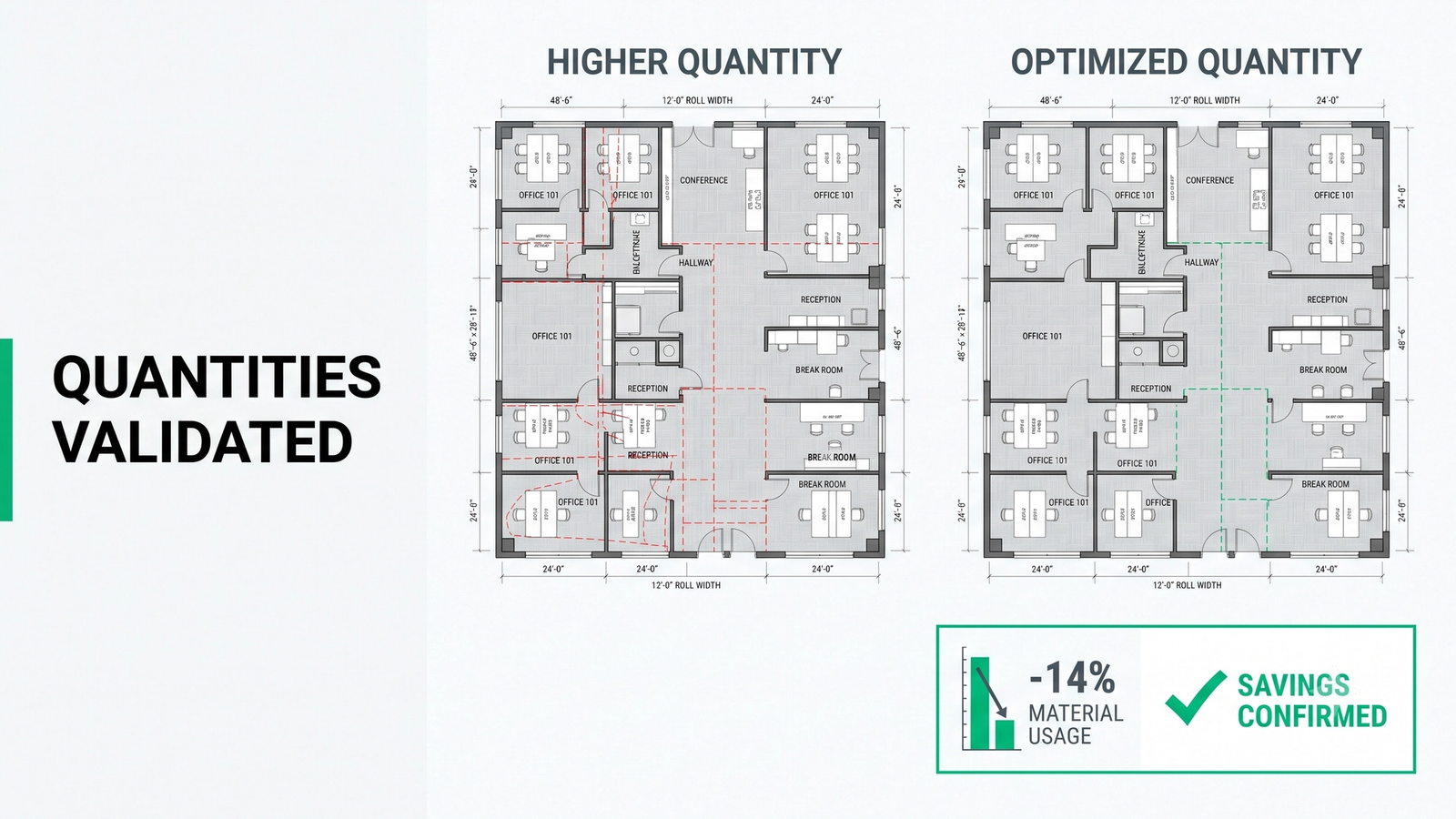
The gap came down to estimating philosophy. Callidus tends to be more conservative. It leans on broader waste assumptions and traditional estimating rules, which generally push material quantities higher. Many contractors like that cushion because it feels safe.
MeasureSquare is more layout-driven. It looks at how the flooring will actually be installed and accounts for the details that determine real yield. Our estimators worked through the same projects in both platforms and compared the output side by side, so the client could see the reasoning, not just the totals.
The validation covered four representative project types:
- Carpet tile in office spaces, where module orientation and attic stock drive the count.
- Broadloom carpet in corridors, where roll width and seam placement decide how much material a run really needs.
- Sheet vinyl in healthcare-type spaces, where flash coving, seam welds, and directional layout change the quantity.
- Repeated unit layouts in multifamily projects, where a small per-unit difference multiplies fast across a building.
Across those comparisons, the pattern was consistent. MeasureSquare returned lower numbers because it was optimizing material through better layout planning, considering geometry, roll widths, seam locations, installation direction, reusable offcuts, and pattern flow. It was not ignoring material. It was reducing avoidable waste.
Pro tips for any team making the same switch:
- Do not compare raw totals. Compare the layout logic behind each total.
- Confirm roll widths and installation direction before you trust any broadloom or sheet vinyl output.
- Check how offcuts are being reused. Optimized reuse is often the entire difference.
- Keep estimator judgment in the loop. No platform replaces knowing waste assumptions, seam planning, and field conditions.
How Do You Switch Flooring Software Without a Material Shortage?
The comparison work answered the technical question. One more step answered the human one.
We arranged a call between the client and one of our existing clients, a flooring professional with more than 30 years of experience who was already running MeasureSquare in real projects. That conversation carried weight our team alone could not, because it came from a peer who had lived the same transition.
The client asked the question that was really keeping them up at night: had MeasureSquare's lower quantities ever caused a material shortage on the job? The answer was reassuring and specific. When the takeoff is done correctly, with accurate room dimensions, proper material direction, correct roll widths, and realistic installation assumptions, the optimized quantities are typically enough for the job. The lower number was the result of tighter planning, not missing material.
That single conversation bridged the gap between software logic and field experience, and it is the point where the hesitation broke.
Before, the client faced a hard choice. After, they had a working model.
Cost: Recruiting and training an in-house MeasureSquare team versus an immediate, dedicated partner at roughly 60 percent lower cost.
Consistency: A rotating cast of new hires learning the software versus the same trained estimators applying a repeatable process.
Turnaround: Weeks lost to onboarding versus takeoffs moving from day one.
Scalability: Fixed payroll regardless of bid flow versus capacity that flexes with the pipeline.
Request a risk-free pilot takeoff at unicalibreestimating.com/contact and see the difference on a live set of plans.
The Results
A Clean Transition, Kept Bidding, Protected Budget
The payoff showed up in operations and in cash, not in a vanity chart.
Software: Ten-plus years in Callidus, then operating in MeasureSquare with a trained team already in place.
Ramp: No pause in active bidding, versus the weeks or months an in-house build would have cost.
Confidence: Persistent shortage fear, replaced by material quantities validated across carpet tile, broadloom, sheet vinyl, and repeated multifamily units, plus direct confirmation from a 30-plus-year flooring peer.
Budget: Approximately 60 percent lower cost than recruiting, onboarding, and training an equivalent in-house MeasureSquare team, with the hidden costs of hiring (recruitment time, supervision, trial-and-error learning, delayed productivity) avoided entirely.
The broader lesson holds for any contractor weighing a platform change. A lower software quantity is not automatically a problem. The question that matters is whether you understand why the quantity was generated. Once this client saw that Callidus was conservative and MeasureSquare was optimized, the concern dissolved.
A note on generalized outcomes: disciplined, layout-driven takeoffs can protect margin by trimming avoidable material waste and by keeping bids consistent, and contractors moving to a dedicated model typically reclaim meaningful estimating hours each week. Those are documented ranges across our work, not a promise of identical numbers on every project.
See how a dedicated estimator helps you bid more at unicalibreestimating.com/services.
How to Replicate This on Your Own Transition
If you are staring at a software switch and worried about quantities, the path is straightforward.
What to send: Your current plans and specs, any finish schedule and addenda, your preferred material brands, roll widths, and labor rates, plus a sample project you already estimated in your old platform so we can run a true side-by-side.
What you get back: A MeasureSquare takeoff with room-by-room quantities by material type, layout-specific waste factors, seam and roll planning, transition and base counts, marked-up plans, scope notes, and native project files your team can import and adjust without re-entry. When you want it, we coordinate live material and freight pricing too.
Timeline: Standard turnaround runs 24 to 48 hours for most trade packages, with same-day rush available when a bid deadline is bearing down.
Communication: A dedicated estimator, reachable by email and phone, who learns your standards over time rather than restarting with every project. The same disciplined, peer-reviewed flooring estimating process that carried this client is available to you across every sector we serve.
Download the checklist at unicalibreestimating.com/resources to pressure-test your own takeoffs before your next submission.
Frequently Asked Questions
Can an outsourced estimator work in my MeasureSquare software?
Yes. Software-agnostic estimating partners like Unicalibre Estimating produce takeoffs natively in MeasureSquare and deliver project files your team can open, adjust for pricing or labor, and submit without manual re-entry. That native workflow is what let this flooring contractor adopt MeasureSquare estimating services immediately instead of waiting on in-house training.
Why does MeasureSquare calculate lower material quantities than Callidus?
MeasureSquare is layout-driven, so it accounts for room geometry, roll widths, seam locations, installation direction, reusable offcuts, and pattern flow. Callidus applies broader, more conservative waste assumptions. The lower MeasureSquare number usually reflects optimized planning rather than missing material, provided the takeoff uses accurate dimensions and realistic installation assumptions.
Is it cheaper to use MeasureSquare estimating services or build an in-house team?
For most contractors, a dedicated partner is significantly more cost-effective. This client moved forward at roughly 60 percent lower cost than recruiting and training an in-house MeasureSquare team, and avoided the hidden costs of hiring: recruitment time, supervision, trial-and-error learning, and delayed productivity while new estimators ramp.
Will lower MeasureSquare quantities cause a material shortage on site?
Not when the takeoff is done correctly. Optimized quantities are typically sufficient when they use accurate room dimensions, correct roll widths, proper material direction, and realistic installation assumptions. A peer-reviewed process adds a second check on those inputs, which is how this contractor moved from shortage anxiety to validated confidence before their first live bid.
How long does it take to switch flooring estimating software with an outside partner?
With a partner who already runs the platform daily, production can begin right away rather than after weeks of hiring and onboarding. This contractor kept bidding through the entire transition, because a trained MeasureSquare team was in place from day one and validated the quantity questions in parallel with live work.
The Bottom Line
This contractor did not just change tools. They cleared a real risk, a decade-long platform switch that could have stalled their bidding and exposed them to a post-award shortage, without losing a single week of pre-construction capacity. The combination of hands-on MeasureSquare support, honest side-by-side project comparisons, and direct validation from an experienced flooring peer turned hesitation into a trusted workflow.
Bid season does not wait for onboarding. If you are weighing a move to MeasureSquare, or your estimating desk is already at capacity, the fastest way to protect your margins is to hand the transition to a team that has done it before.
Book a call and send your plans for turnaround and pricing at unicalibreestimating.com/contact.
Want results like these?
Send us your plans and get a fast, peer-reviewed takeoff for your next bid.
Request a QuoteMore case studies
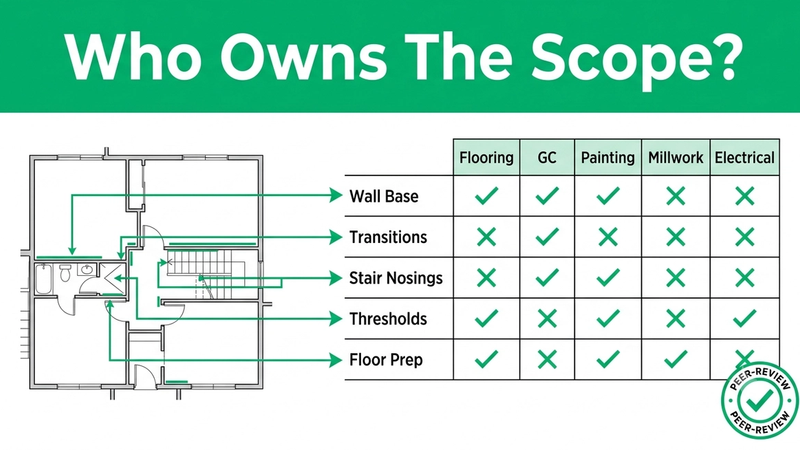
Flooring | Commercial (multi-trade commercial project with a scope of work matrix in the general conditions)
Flooring Scope of Work: The Responsibility Matrix Changed the Entire Takeoff
Texas
Read case study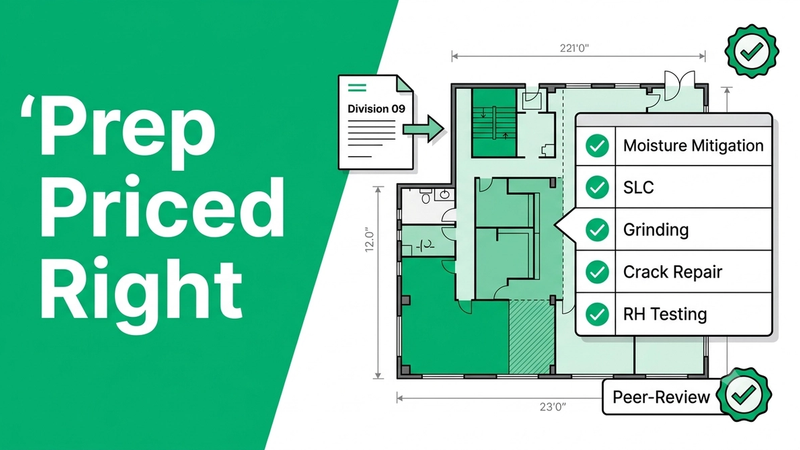
Flooring | Commercial (tenant improvement or general commercial fit-out, resilient and soft-surface flooring on concrete slab).
Commercial Floor Prep Estimating: The Bid Was Losing Money Before It Was Awarded
California
Read case study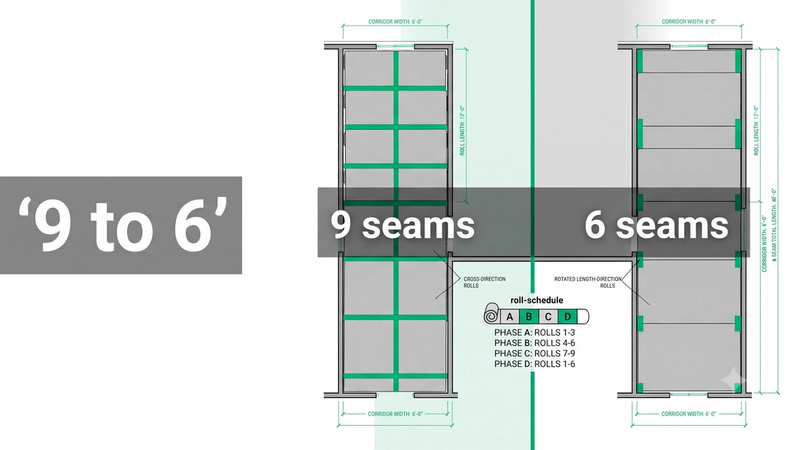
Flooring | Multifamily