
Case Study · Flooring | Commercial (multi-trade commercial project with a scope of work matrix in the general conditions)
Flooring Scope of Work: The Responsibility Matrix Changed the Entire Takeoff
Drawings showed one story; the responsibility matrix showed another. Here's how a flooring scope review reshaped a commercial bid, protecting margins from over-pricing and post-award scope.
The Challenge
When the Drawings Say Yours, and the Matrix Says Otherwise
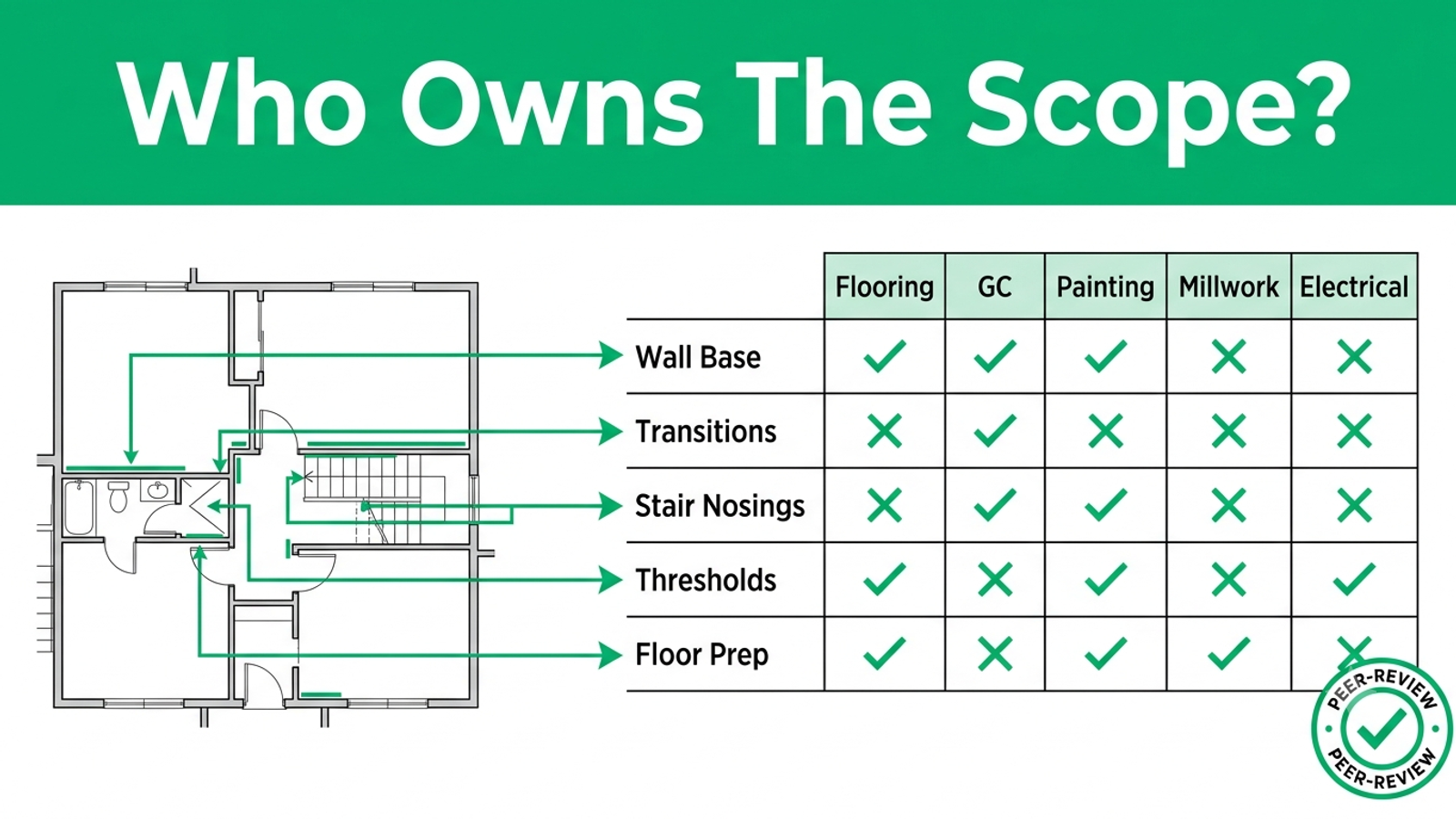
Flooring scope of work on a commercial project is not defined by the drawings alone. It is defined by the drawings plus the responsibility matrix (also called the scope of work matrix or division of work matrix) that sits in the general conditions or specifications. If your takeoff reads only the drawings, you will price scope you do not own and miss scope you do. Both are competitive problems, and both live in the same document most rushed takeoffs never open.
A commercial flooring contractor sent us a bid package for a multi-trade commercial project. The finish schedule, floor plans, and interior details identified every finished flooring surface across the building. On its face, the takeoff was straightforward: measure what was drawn, quantify by material, add prep and accessories, price the labor. That is exactly how a bid becomes a financial trap in two directions at once.
The bid documents included a scope of work matrix in the general conditions. That matrix explicitly reallocated several scope items between the flooring subcontractor, the general contractor, and other trades. If the estimator treated everything drawn on the floor plan as flooring scope, the takeoff would have:
- Over-priced scope owned by other trades, making the bid uncompetitive against contractors who read the matrix correctly, and
- Under-priced scope the flooring subcontractor actually owned but the drawings labeled ambiguously, creating post-award exposure the contractor would have to absorb.
That dual risk is what makes the responsibility matrix the most under-utilized document in commercial flooring estimating. Most estimators know it exists. Fewer read it carefully. Even fewer cross-check every drawing scope item against it before quantifying.
The financial exposure lives in a specific set of overlap zones that recur across commercial projects:
- Wall base (flooring versus painting versus finish carpentry, depending on base height and material)
- Transitions between flooring types (which flooring sub owns which transition, or does the GC)
- Stair nosings (flooring versus metal fabricator versus GC)
- Threshold plates at door openings (flooring versus door hardware versus metal)
- Expansion joints and cover plates (flooring versus waterproofing versus GC)
- Cove base at millwork and casework (flooring versus millwork subcontractor)
- Floor prep and moisture mitigation (flooring versus GC versus concrete)
- Sealers and coatings on concrete (flooring versus concrete polisher)
- Sound attenuation underlayment (flooring versus acoustical)
- Static-dissipative flooring grounding (flooring versus electrical)
- Access floor systems (flooring versus raised-floor specialty)
- Floor demolition and abatement (flooring versus GC versus abatement)
- Line striping on athletic or industrial flooring (flooring versus specialty coatings)
Any one of those can move materially between trades depending on how the matrix is written on a specific project. Assume ownership one way when the matrix says the other, and you either lose the bid on price or lose margin after award.
That was the pattern here.
At a glance:
- Project: Commercial multi-trade project with a scope of work matrix in the general conditions
- What the drawings suggested: Broad flooring responsibility across every finished floor surface, plus base, transitions, and adjacent scope items
- What the responsibility matrix actually said: Several items reallocated to other trades, and a few ambiguous items clearly assigned to the flooring subcontractor
- What we caught: Scope over-inclusions and scope under-inclusions in the same takeoff, before bid submission
Our Solution
Read the Matrix Before You Quantify the Scope
At Unicalibre Estimating, we do not treat the drawings as the sole source of flooring scope on any commercial bid. The drawings tell you what is being installed. The responsibility matrix tells you who owns installing it. Every commercial takeoff we deliver runs through a structured scope responsibility review before quantities are finalized.
Unicalibre Estimating provides commercial flooring scope of work review that cross-checks every drawing scope item against the responsibility matrix, general conditions, and specifications. On this commercial project, our review identified scope items on the drawings that belonged to other trades and scope items in the specifications that belonged to the flooring subcontractor but were not obvious on the plans. The result was a bid that reflected true scope responsibility rather than a drawing-only interpretation.
Unicalibre Estimating is an architect-led flooring estimating partner, and reading the responsibility matrix the way a commercial project manager will read it after award is a core part of what our review process is built to do.
Upload your plans and get a fast takeoff quote at unicalibreestimating.com/contact and you can put the same review discipline to work on your next commercial bid.
What Is a Responsibility Matrix in Commercial Construction?
A responsibility matrix (also called a scope of work matrix, division of work matrix, or trade responsibility matrix) is a table in the bid documents that assigns specific scope items to specific trades. It typically lives in the general conditions, front-end specifications, or Division 01. Each row is a scope item. Each column is a trade or entity (GC, flooring subcontractor, painting subcontractor, millwork, electrical, and so on). The intersection tells you who owns that item.
The matrix exists because drawings alone cannot resolve scope overlaps between trades. Wall base is drawn on the flooring plan but can belong to painting on some projects. Stair nosings are drawn on the flooring plan but can belong to the metal fabricator. Transitions are drawn everywhere and can belong to the flooring subcontractor who is installing the lower material, the higher material, or a designated party. Without the matrix, every commercial bid is guessing at the split.
How the Review Actually Works
Our estimator ran through the bid documents in a specific sequence:
Step 1: Located the responsibility matrix. Sometimes labeled clearly, often buried in the general conditions or Division 01 specifications. On some projects, an addendum modifies it. The matrix has to be found in full, including any amendments.
Step 2: Read the matrix against the flooring row. Every scope item assigned to the flooring subcontractor, including items that might not appear on the finish schedule. Every scope item assigned to another trade that a flooring estimator might otherwise assume was theirs.
Step 3: Cross-referenced the drawings. Every scope item shown on the finish schedule, floor plans, interior details, and elevations was matched against the matrix. Items shown on the flooring drawings but assigned to another trade were removed from the takeoff. Items assigned to the flooring subcontractor but not obviously drawn on the flooring plans were added.
Step 4: Read the specifications. Division 09 specifications sometimes assign scope that is not on the finish schedule (moisture mitigation triggers, adhesives, transition profiles, cove base by type). These were verified against the matrix.
Step 5: Documented the split. For every ambiguous or overlapping item, we captured the specification language and matrix assignment in scope notes the contractor could carry into any negotiation or scope clarification with the GC.
Step 6: Peer-reviewed the takeoff. The final takeoff went to a second estimator for mandatory peer review, focused on scope responsibility alignment, quantities, and drawing coverage. That peer-reviewed discipline is a core part of what Unicalibre Estimating provides, because a second read of the responsibility matrix is what catches the assignments a first read glossed past.
Where Does the Responsibility Matrix Change a Flooring Takeoff Most?
In the overlap zones. These are the recurring items that move between trades depending on the specific matrix, and every one of them can materially reshape a commercial flooring bid.
Wall base. Standard resilient base is almost always flooring scope. Painted base can belong to painting. Tall base or accent base can belong to finish carpentry or millwork. On some projects, base at millwork casework is explicitly reassigned to the millwork subcontractor.
Transitions between flooring types. The matrix often names which flooring subcontractor owns the transition when different trades install adjacent materials. Assume the wrong side and you either double-price the transition or leave it out entirely.
Stair nosings and treads. Rubber and vinyl nosings usually belong to flooring. Metal nosings can belong to the metal fabricator or the GC.
Threshold plates at doorways. These can belong to flooring, door hardware, or metal, depending on material and location.
Cove base at casework. Cove base at millwork or medical casework is a frequent reassignment to the millwork subcontractor, but the drawings will still show it running under the casework.
Floor prep and moisture mitigation. Split responsibility between GC and flooring subcontractor is written differently on almost every project. This overlaps with commercial floor prep scope more broadly.
Static-dissipative and specialty grounding. ESD flooring systems require electrical grounding that is often explicitly not flooring scope, even though the flooring drawings show the system.
Miss the matrix and any one of these can quietly move the bid five to fifteen percent in the wrong direction.
Pro tips for any commercial flooring scope of work review:
- Find the responsibility matrix on every commercial bid. If you cannot find one, issue an RFI. Silence is not the same as ownership.
- Read the matrix against the flooring row line by line. Do not skim.
- Cross-reference every drawing scope item against the matrix before quantifying.
- Read the addenda. Matrix assignments frequently get modified after the initial bid documents release.
- Capture scope split language in your bid notes, so you can defend the interpretation later.
- When the matrix and drawings disagree, the matrix generally governs. Confirm and RFI when it does not.
Before, the takeoff was priced from the drawings alone. After, it was priced from the drawings validated against the responsibility matrix.
Scope integrity: Drawing-only interpretation versus drawing plus matrix validation.
Over-pricing risk: Scope owned by other trades priced into the bid versus removed from the bid.
Under-pricing risk: Scope actually owned by the flooring subcontractor but not obvious on the plans versus captured in the takeoff.
Bid competitiveness: Compromised in either direction versus reflective of true responsibility.
Post-award exposure: Scope creep and change-order fights versus a defensible scope package with documented specification language.
Request a risk-free pilot takeoff at unicalibreestimating.com/contact and see the review process on your live plans.
The Results
A Bid That Reflected True Responsibility, Not Just the Drawings
The scope catch went both ways, which is the outcome that only a responsibility matrix review produces.
Scope over-inclusions caught. Items shown on the drawings but assigned to other trades were removed from the takeoff. The contractor stopped bidding scope that would have made their price uncompetitive against contractors who read the matrix correctly.
Scope under-inclusions caught. Items assigned to the flooring subcontractor in the matrix but not obvious on the drawings were added to the takeoff. The contractor stopped absorbing scope that would have showed up as an unpriced cost after award.
Documentation for negotiation. Every ambiguous or reassigned scope item was captured with the specification language and matrix reference. If a GC challenged an interpretation during bid clarification or after award, the contractor had the documentation to defend the position.
Scope responsibility clarity. The takeoff distinguished flooring scope from GC scope from other-trade scope, so the project manager could coordinate at kickoff without inheriting ambiguity.
Bid confidence. Real. The bid reflected the specifications as written, and could be held or defended without wondering where the hidden exposure was going to hit.
A note on generalized outcomes: disciplined responsibility matrix review typically moves a commercial flooring bid 5 to 15 percent in aggregate scope, in either direction, depending on how the matrix is written. Reviews that only reach one direction (only catching missed scope or only removing over-priced scope) leave real money on the table. Those are documented ranges across our work and industry practice, not a promise for every project.
See how a dedicated estimator helps you bid more at unicalibreestimating.com/services.
How to Replicate This on Your Next Commercial Bid
If a commercial flooring bid is on your desk and it involves multiple trades, the path is straightforward.
What to send: Full drawing set, finish schedule, general conditions, Division 01 and Division 09 specifications, any responsibility matrix or scope of work matrix, addenda, and any bid clarification correspondence. If you already have a takeoff you want validated against the matrix, send that too.
What you get back: A flooring estimating deliverable with room-by-room quantities, scope of work responsibility documented against the matrix, over-inclusions removed, under-inclusions added, marked-up plans, scope notes citing the matrix and specification language, and native project files your team can import and adjust without re-entry.
Timeline: Standard turnaround runs 24 to 48 hours for most trade packages, with same-day rush available when a bid deadline is bearing down.
Communication: A dedicated estimator who learns your standards over time. The same disciplined process is available across every sector we serve.
Download the checklist at unicalibreestimating.com/resources to pressure-test your commercial flooring scope workflow before your next submission.
Frequently Asked Questions
What is a responsibility matrix in commercial construction?
A responsibility matrix is a table in the bid documents that assigns each scope item to a specific trade or entity. It typically lives in the general conditions, front-end specifications, or Division 01. For flooring subcontractors, the matrix determines ownership of wall base, transitions, stair nosings, thresholds, cove base at millwork, floor prep, moisture mitigation, and specialty items that overlap between multiple trades.
Who is responsible for wall base, the flooring contractor or the painter?
It depends on the responsibility matrix on each project. Standard resilient base is almost always flooring scope. Painted base can belong to painting. Tall accent base can belong to finish carpentry or millwork. Cove base at millwork casework is often reassigned to the millwork subcontractor. The finish schedule tells you what base is installed. The responsibility matrix tells you who installs it.
How do you determine flooring scope of work on a commercial project?
You cross-reference three documents together: the drawings and finish schedule (what is being installed), the specifications (how it must be installed), and the responsibility matrix (who owns installing it). All three have to agree, and when they do not, the matrix generally governs. Skipping the matrix leaves the bid exposed to both over-pricing and under-pricing errors.
Can outsourced flooring estimating services review the responsibility matrix?
Yes. Unicalibre Estimating cross-checks every drawing scope item against the responsibility matrix, general conditions, and specifications on every commercial bid. The review identifies scope items to remove from the flooring takeoff because they belong to other trades, and scope items to add because they belong to the flooring subcontractor even though the drawings do not make it obvious.
What happens when the drawings and the responsibility matrix disagree?
The responsibility matrix generally governs, because it is a front-end contract document that assigns scope explicitly. When drawings and matrix disagree, the correct move is to price per the matrix and issue an RFI to confirm the interpretation. A takeoff that quietly resolves the disagreement one way or the other, without documentation, exposes the contractor to change-order fights after award.
The Bottom Line
The drawings show you what is being installed. The responsibility matrix tells you who is installing it. Skip the second document and the bid is exposed in both directions: pricing scope owned by other trades makes the bid uncompetitive, and missing scope actually owned by the flooring subcontractor absorbs cost after award. Neither is a spreadsheet error. Both are reading errors, and both are avoidable.
A good commercial flooring estimator does not stop at the finish schedule. They read the responsibility matrix line by line, cross-check it against every scope item on the drawings, and deliver a takeoff that reflects true scope responsibility. That is the difference between a bid the contractor wins for the right reasons and a bid the contractor wins and then pays for later.
Book a call and send your plans for turnaround and pricing at unicalibreestimating.com/contact.
Want results like these?
Send us your plans and get a fast, peer-reviewed takeoff for your next bid.
Request a QuoteMore case studies
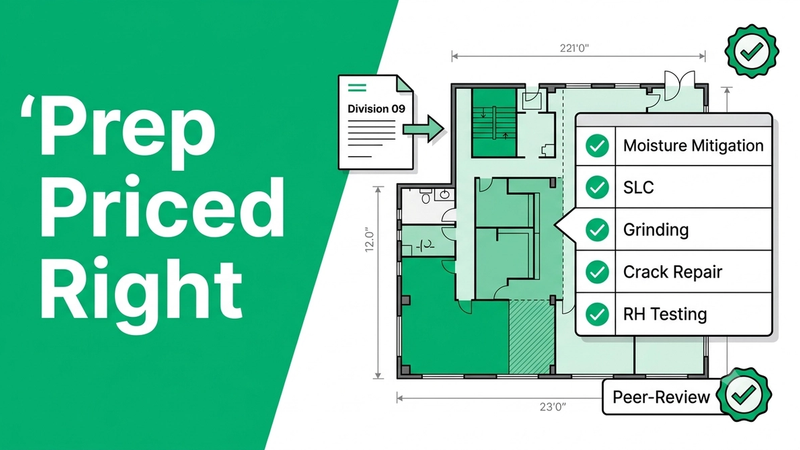
Flooring | Commercial (tenant improvement or general commercial fit-out, resilient and soft-surface flooring on concrete slab).
Commercial Floor Prep Estimating: The Bid Was Losing Money Before It Was Awarded
California
Read case study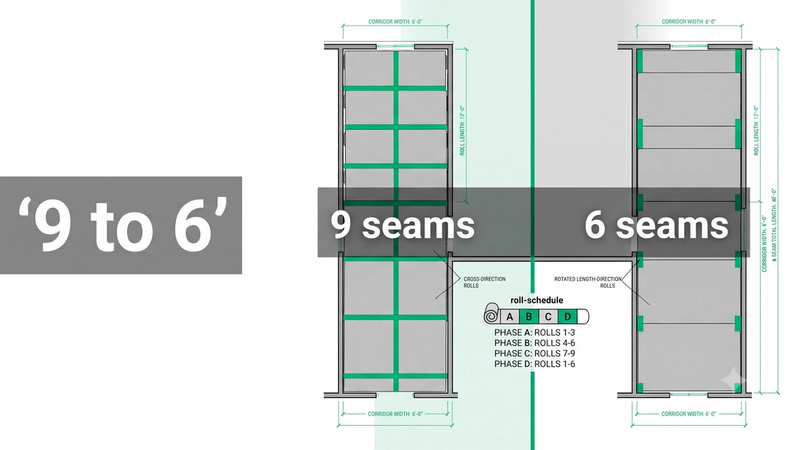
Flooring | Multifamily
Multifamily Carpet Estimating Services: From 9 Corridor Seams to 6
Read case study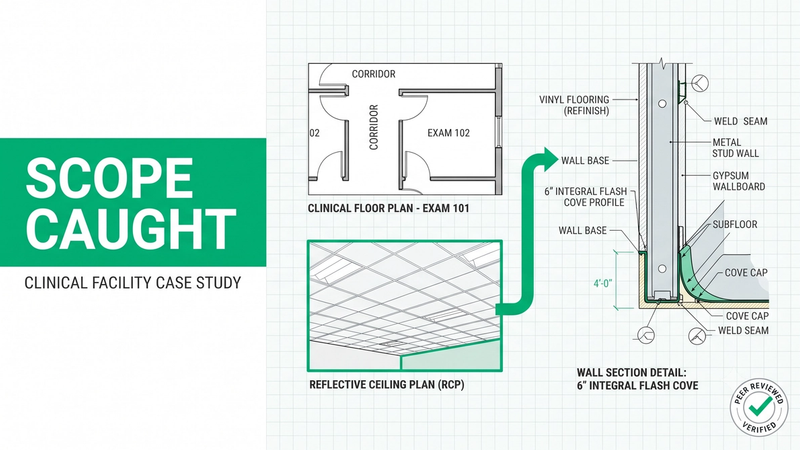
Flooring | Commercial Healthcare